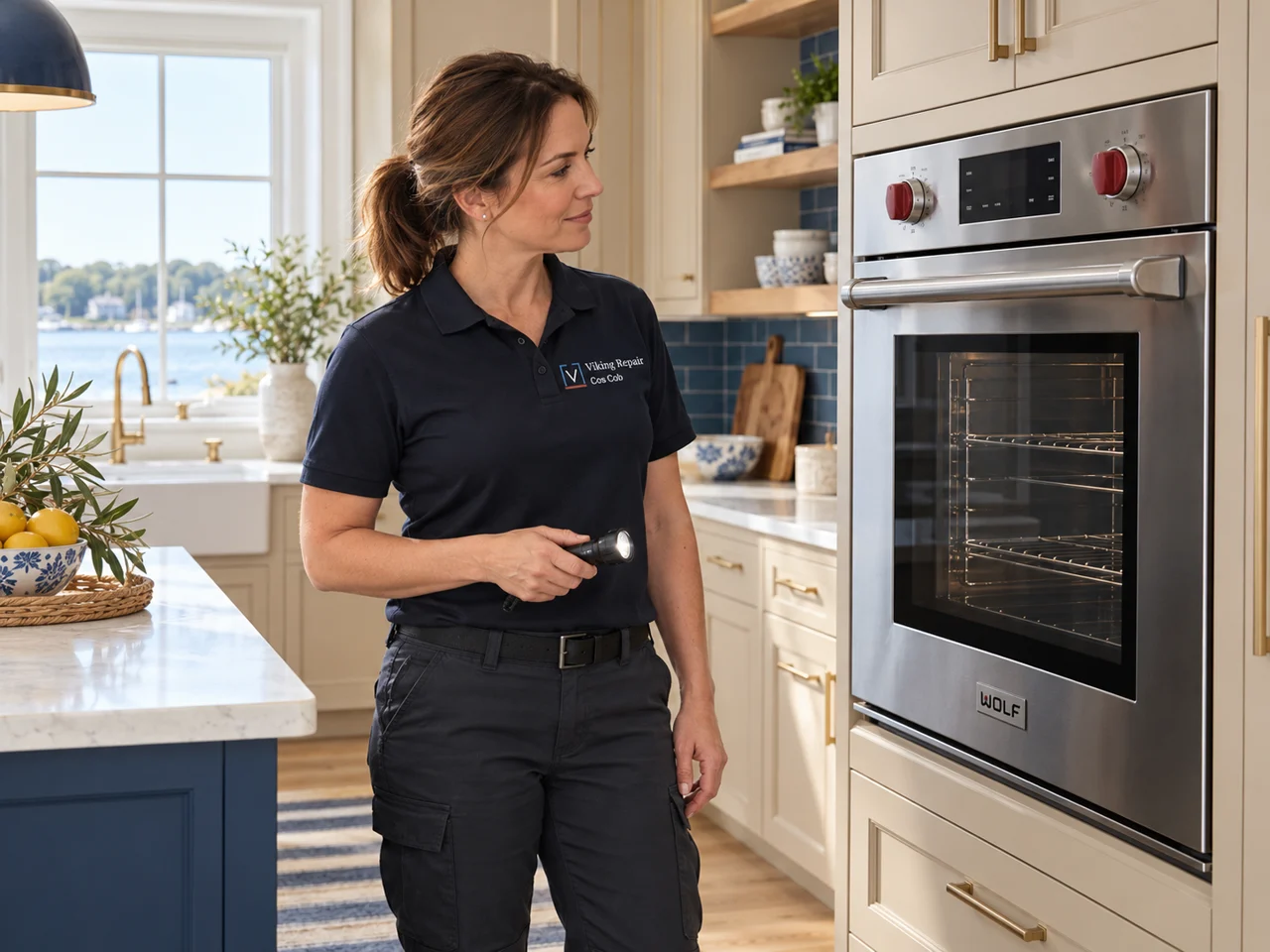
Safe preparation
Limit door openings and move thawing contents to suitable storage. Photograph visible frost without removing it with a sharp tool. Do not use a heat gun or disassemble the cabinet.
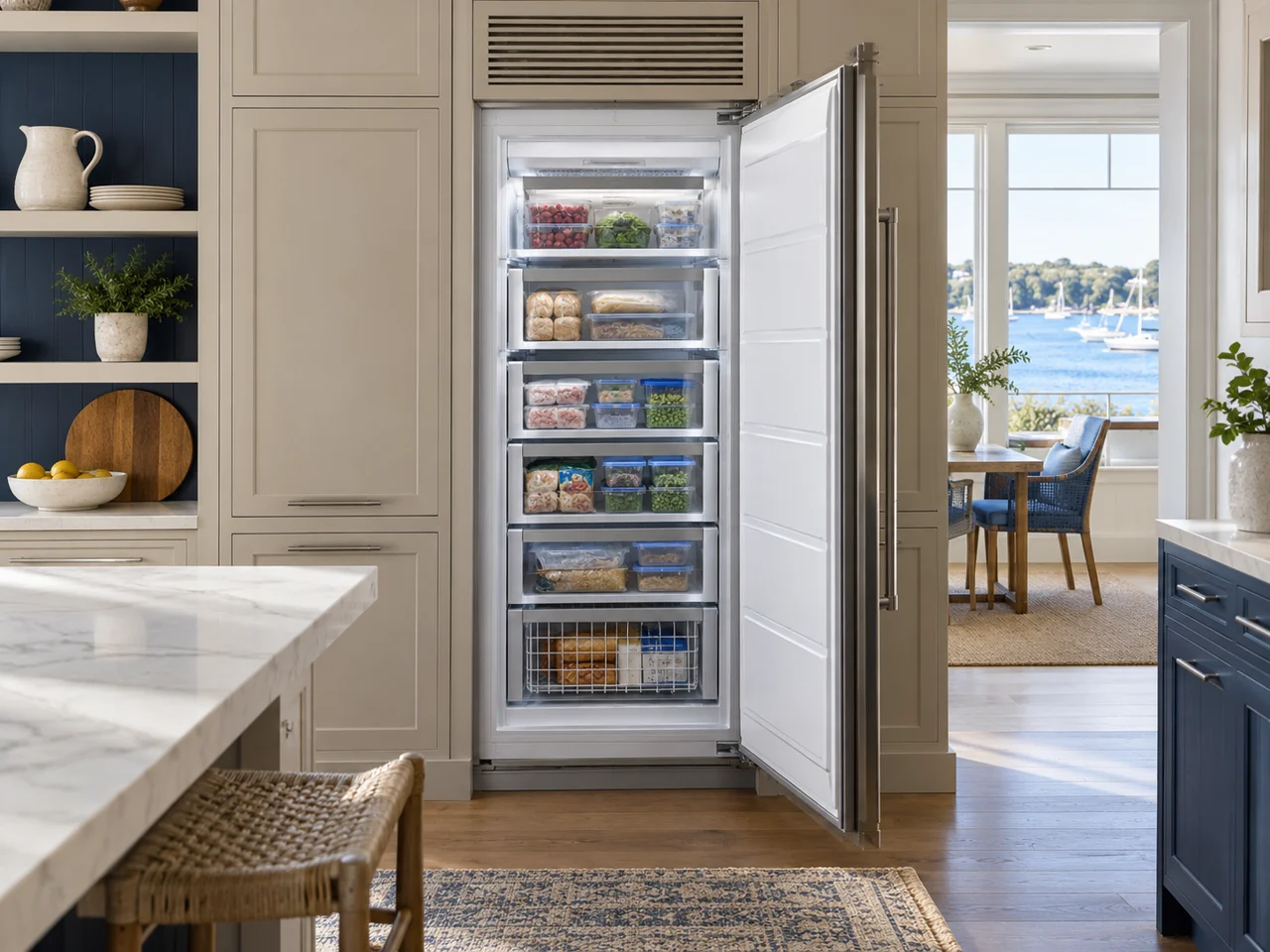
A useful detail for this request
If frost returns shortly after it disappears, report the pattern and timing. Repeated manual defrosting should not substitute for identifying the cause.
Changes you may notice
- Frozen food is softening despite the normal setting.
- Frost returns around a door edge.
- A drawer will not seat fully.
- The cabinet runs for unusually long periods.
- Ice accumulates where it was not present before.
A focused diagnostic visit
Testing is adapted to the appliance and reported behavior. The items below guide the inspection; they are not a promise that a particular component needs replacement.
- Temperature trend and control response
- Door or drawer closure and gasket contact
- Air circulation and fan behavior
- Defrost controls, drainage and cooling performance
Prepare the details that matter
A drawer that cannot close can let warm room air into the cabinet. Photographs of the obstruction can help describe the problem without dismantling anything.
The pattern of frost matters: a door-edge buildup gives different information from frost hidden behind an interior panel.
A brand, appliance type and concise symptom description are enough to begin. Installation restrictions can be discussed without moving or dismantling the appliance.
From request to an agreed repair
The service process has a clear decision point: diagnosis first, approval second. Ask about the scope, parts and price before authorizing work.
The diagnostic/service call is $95 and is credited toward an approved repair. An itemized repair price is agreed after diagnosis and before work. Genuine OEM parts are used. Same-day and emergency appointments depend on schedule and location.
Parts, warranty and scope
1-Year Parts & Labor Warranty covers parts installed and labor performed under normal use. It excludes new unrelated faults, misuse, power surges and work performed by others after the service visit.
Genuine OEM parts are used. Refrigerant and sealed-system work is performed by an EPA-certified technician. This is independent service, with no claim of manufacturer endorsement.
Helpful answers
Before you arrange service
Will you need to pull out an integrated freezer?
That depends on the fault and installation. Access requirements are discussed before moving heavy equipment or disturbing cabinetry.
Should I chip away the ice?
No. Sharp tools can damage the cabinet or refrigerant tubing. Describe or photograph visible buildup and leave disassembly to the technician.
Is frost always a defrost problem?
No. Air entering around a door, loading restrictions and defrost faults can look similar. Where and when the frost appears helps guide inspection.